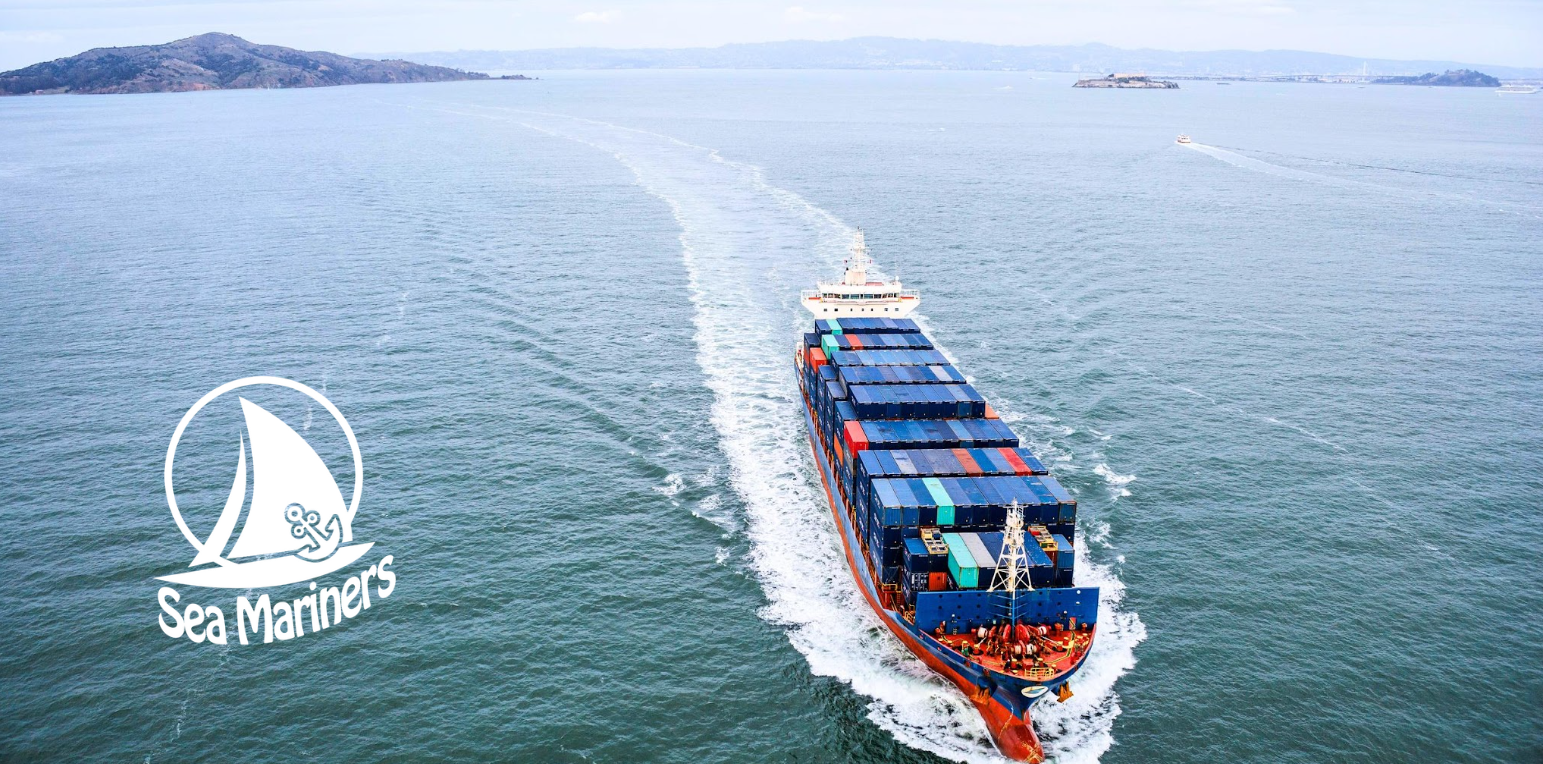
For most high school graduates, the path to a professional career is a long one, measured in years of college, costly training, and a search for an entry-level break. For a select group of pioneers from the Sea Mariners program, that path was a gangway. In a landmark achievement for youth maritime education, several recent Sea Mariners high school graduates have successfully bypassed intermediate steps, securing positions to work directly onboard vessels immediately after graduation.
This pioneering accomplishment is not just a personal victory for these young mariners; it is a powerful proof of concept. It validates an innovative educational model that is successfully bridging the long-standing, critical gap between a high school classroom and the high-stakes, high-standards reality of the global maritime industry.
The maritime industry is notoriously challenging to enter. For decades, the path has been rigid and resource-intensive: a four-year maritime academy degree, followed by costly specialized training, and a lengthy application process.
The introduction of the K-12 Senior High School (SHS) program, and with it the specialized Maritime strand, was intended to change that. As far back as 2016, a Joint Memorandum between the Department of Education (DepEd) and the Maritime Industry Authority (MARINA) laid the official groundwork for an SHS specialization. This was a progressive step, backed by industry partners, to create a new, accessible pipeline of maritime professionals.
However, a framework on paper does not always translate to a job on the water. The SHS system itself has faced persistent “disconnect” challenges, an issue highlighted in ongoing national discussions about curriculum reform. Many specializations, including the maritime track, struggled with a gap between academic knowledge and the practical, certified competencies demanded by the industry.
Students might graduate without the single most critical document required for any maritime employment: the STCW (Standards of Training, Certification and Watchkeeping) Basic Training certificate. This non-negotiable, internationally-mandated license remained a significant cost and time barrier, leaving SHS Maritime graduates in a “qualification limbo.”
This was a critical failure for motivated students like Jave Paulo Ybañez, a TVL-Maritime SHS graduate now working as a Deck Trainee. He, like many, was driven by a clear-eyed purpose: “I am choosing this career for the salary,” Jave admits. “I know this is the way to give a good life to my family and my future family, and of course to travel the world for free.” For students with this motivation, a “qualification limbo” is a dead end.
This is the exact problem the Sea Mariners program, established in 2013, was built to solve. Its goal was never just maritime awareness, but tangible maritime readiness.
The program’s innovative masterstroke is the BT-Work Immersion component. The Sea Mariners leadership engineered an ingenious solution: they converged the professional STCW Basic Training with the 80-hour work immersion requirement of the DepEd. This “two birds with one stone” approach is a game-changer.
Instead of a typical immersion shadowing an office job, Sea Mariners spend those 80 hours in a world-class training facility, earning the exact same internationally-mandated safety certification as any professional seafarer.
For graduates, this convergence is the key that unlocks the door. Cristal R. Madera, a program alumnus now working as a Deck Trainee, found his passion for nature advocacy in the program, but soon realized its career impact. “It was unknown to me at first that Sea Mariners would be the bridge for me to get on board,” he shares.
Jave Ybañez agrees, crediting the program’s structure for his success. “For the Sea Mariners, thank you for helping me,” he says. “Thank you for the guidance and support. You were one of the ways to fulfill my future”.
Earning a certificate, however, is only half the battle. The program’s true power—and what makes its graduates so appealing to employers—lies in its deep-rooted, non-negotiable culture of leadership, discipline, and safety.
From the moment they join, a student is no longer just a student; they are a “Sea Mariner.” Their school is a “Ship,” and their teacher is a “Ship Adviser.” Each “Ship” is run by a student-led command structure, with roles like Master Captain and Division Leader. This framework is bound by the Sea Mariners Preamble, a pledge recited at every meeting to “uphold the highest standards of honor, integrity, and discipline.”
This culture is not just theoretical; it’s proven essential at sea. “I learned time management, to wake up early, and to organize the things I need to do, like how to balance work and study,” Cristal says of his adjustment to ship life.
For Jave, the most critical adjustments were exactly what the program trained him for: teamwork and safety. “First, you learn how you get along with your co-workers because on a ship, you are with different nationalities,” Jave explains. “Second, the work here is very crucial, especially for a first-timer, so you must always think ‘safety first’ for yourself.”
“We are incredibly proud of these pioneers,” said Hector Manuel Jon Brizuela, Program Manager at PTC and National Training Supervisor of Sea Mariners. “They embody the very purpose of our program. We don’t just teach maritime skills; we are committed to developing young leaders, preparing them holistically for the unique challenges of life at sea. This achievement is a testament to the rigorous discipline instilled through our training and the culture of safety and excellence we promote from day one. These graduates are not just job-ready; they are resilient, responsible, and ready to be the committed future mariners of the Nation.”
As these young mariners set sail, they are not just starting their careers; they are leaving a clear wave for others to follow. Jave, Cristal, and their fellow pioneers are living proof that the gap between high school potential and professional reality—a gap that has been the subject of national-level policy discussions—can be bridged.
They are the living, working proof that with vision, private-public partnership, and a focus on both competence and character, a high school program can, in fact, produce world-class, ship-ready professionals.
Their parting advice to the next generation of Sea Mariners is a perfect reflection of the resilience they’ve learned. “Let’s not stop believing in ourselves that we can do it, and let’s not waste the opportunities that come to us,” Cristal advises. “Just keep trying… everything will fall into place at the right time!”
Jave echoes the sentiment, fully aware of the challenges. “Don’t give up on your dreams… don’t quit on it. Help yourself achieve your dream. It may be hard, but you have to motivate yourself.”
The Sea Mariners program, founded in 2013, is a youth development initiative dedicated to inspiring high school students toward maritime careers. Through a unique structure of school-based “Ships” and innovative partnerships, the program fosters leadership, environmental stewardship, and career readiness, preparing the next generation of maritime professionals.

Comments are closed