In celebration of International Women’s Day, Women in Maritime
Philippines (WIMAPHIL) presented “Vista Maritima: Elections and
Beyond,” an online forum designed to generate interest in the
Philippine maritime vision by allowing candidates in the upcoming
national elections to share their proposed agenda and reforms for
the industry.
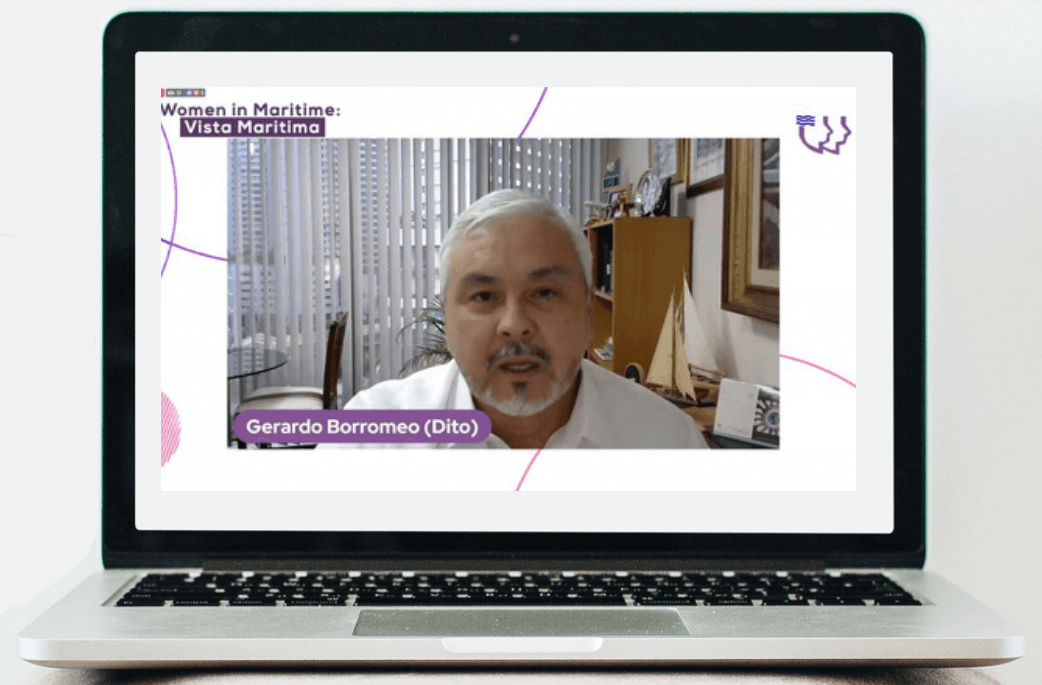
Representing the
maritime
employment sector,
PTC CEO Gerardo A.
Borromeo gave a
presentation on the
current state of the
industry and the
challenges that it is
facing.
“While the pandemic impacted Filipinos sailing on cruise ships,
the cargo sector continued to operate all throughout,” shared
Mr. Borromeo. “A feat which the Philippines can be very proud of.
Remittances even in 2021 already reached 6.5 billion USD, up 3%
from the previous year. And by 2021 we have already reached
the pre-pandemic level of remittances from the sea-based sector.”
“We remain the seafaring
capital of the world and our
Filipino maritime professionals
as the seafarer of choice. This
shouldn’t come as a surprise
because we have the talent,
loyalty, commitment, and
skillsets to move the world
through our global maritime
professionals (GMP).”
Addressing the attendees, Mr. Borromeo stated that ensuring quality
and effective maritime education and training is the foremost of the
industry’s challenges. “If we want to continue to drive the future of the
maritime industry, we must prepare for a future that will be driven by
significantly more automation in technology and digitization. The
country’s education system needs to then quickly adjust to a STEAMdriven program (Science, Technology, Engineering, Arts, Math).”

Transforming largely manual processes into digital processes,
consistent with a future that will be driven by technology, and learning
from the last two years under a pandemic, he adds that there is an
urgent need to drive greater digitization of the entire process of
documentation and licensing of maritime professionals to enable them
to readily be deployed globally on short notice.
Lastly, he emphasized that employment and contractual obligations
should never be one-sided. “They must recognize the value given by the
tonnage providers: crewing and ship management service providers
and the seafarers themselves, and the tonnage enablers: the ship
owners, which are partners of equal interest.”
Comments are closed