
9 November 2022, COP27 – Sharm El
Sheikh, Egypt: A new Action Plan,
launched at COP 27 by UN
organizations, shipowners and unions,
sets out recommendations to upskill
seafarers to meet shipping’s
decarbonisation goals. The plan is in
response to findings from new
research, the modelling of which
cautions that as many as 800,000
seafarers will require additional
training by the mid-2030s.
Currently accounting for 3% of global
emissions, shipping needs to transition
away from conventional fuels towards
alternative low- and zero-carbon fuels
and technologies to meet the world’s
target of keeping global warming to
1.5C or less by 2050.
The three emission reduction
scenarios assessed in the
research highlight an
immediate need to start
putting the training
infrastructure in place, to
ensure hundreds of
thousands of the world’s
nearly two million seafarers
are upskilled and empowered
through the transition.

Findings also suggest that a
lack of certainty on
alternative fuel options is
having knock-on effects for
seafarer training, as the
global maritime community
works towards a clearer
decarbonization pathway in a
post-fossil fuel era.

The research was conducted by leading maritime consultancy
DNV and commissioned by the Maritime Just Transition Task
Force which was formed to ensure that shipping’s response
to the climate emergency puts seafarers and communities at
the heart of the solution. PTC is a proud partner of the
Maritime Just Transition Task Force.
In response to the training challenge that the modeling lays bare, the Action
Plan makes recommendations for industry, governments, seafarer unions,
and academia (including training providers). These recommendations include:

Sanda Ojiambo, Assistant Secretary-General, and CEO of the UN
Global Compact said: “Climate action focused on people and job
creation must be at the core of a Just Transition to Net Zero. This
new paper highlights that aligning with a 1.5 C trajectory requires
action now to support the upskilling of the maritime workforce as
the shipping industry moves to rapidly cut its greenhouse gas
emissions. The action plan represents a global first – it marks the
first business sector uniting in a tripartite framework – shipowners,
seafarers’ unions, and UN organizations – to discuss how to secure a
Just Transition together.”
Stephen Cotton, General Secretary of the International Transport
Workers’ Federation (ITF) said, “All three scenarios DNV identified
require some form of retraining the workforce. The good news is
that seafarers are prepared and willing to be part of this transition.
But the crew wants to know that the fuels they’re handling are
indeed safe and that we as an industry have the training pathways
established to upgrade their skills. Seafarers and other maritime
workers are already feeling the effects of an unstable climate – dry
unnavigable rivers, soaring ocean surface temperatures, shutdown
ports with heatwaves, and flash floods.”

Guy Platten, Secretary General of the International Chamber of
Shipping, said: “There is an urgent need to establish the infrastructure
and training required to prepare our seafaring workforce, both in
developed and developing countries, to help meet our decarbonization
objectives. This should be done as of today, so they are
ready and able to meet the challenges that new green
fuels and propulsion technologies will pose and mitigate
any potential health and safety risks for ships, communities, the
environment, and seafarers themselves. This is an opportunity for all so
that no one is left behind. Shipping cannot decarbonize without its
workers and the 10-point action plan developed by the Task Force
maps out a pathway for how this can be achieved, as our industry
continues to navigate towards a decarbonized future.”

Kitack Lim, Secretary General of the International Maritime
Organization, said: “Climate change is a global issue that requires a
global response. We must use every tool available to decarbonize the
maritime sector. Alternative fuels and green technologies can help
meet emission reduction targets. This cannot happen without the
people who will be at the heart of implementing shipping’s
decarbonization journey. It is clear that seafarers must have the
appropriate training for a smooth transition to a greener future. This is
something that will be in sharp focus as IMO works on its
comprehensive review of the STCW Training Convention.”
Gilbert F. Houngbo, Director-General, International Labour
Organization: “ A Just Transition to addressing the climate crisis must be
human-centered. Greening the economy in a way that is as fair and
inclusive as possible to everyone concerned, creating decent work
opportunities and leaving no one behind, is essential. Efforts to
decarbonize shipping should be undertaken in accordance with the ILO
Guidelines for a just transition towards environmentally sustainable
economies and societies for all. Doing so will achieve a transition for
seafarers and other maritime workers based upon the importance of
labour standards, productivity, skills development, lifelong learning,
social justice and equality, and which is therefore truly sustainable.”
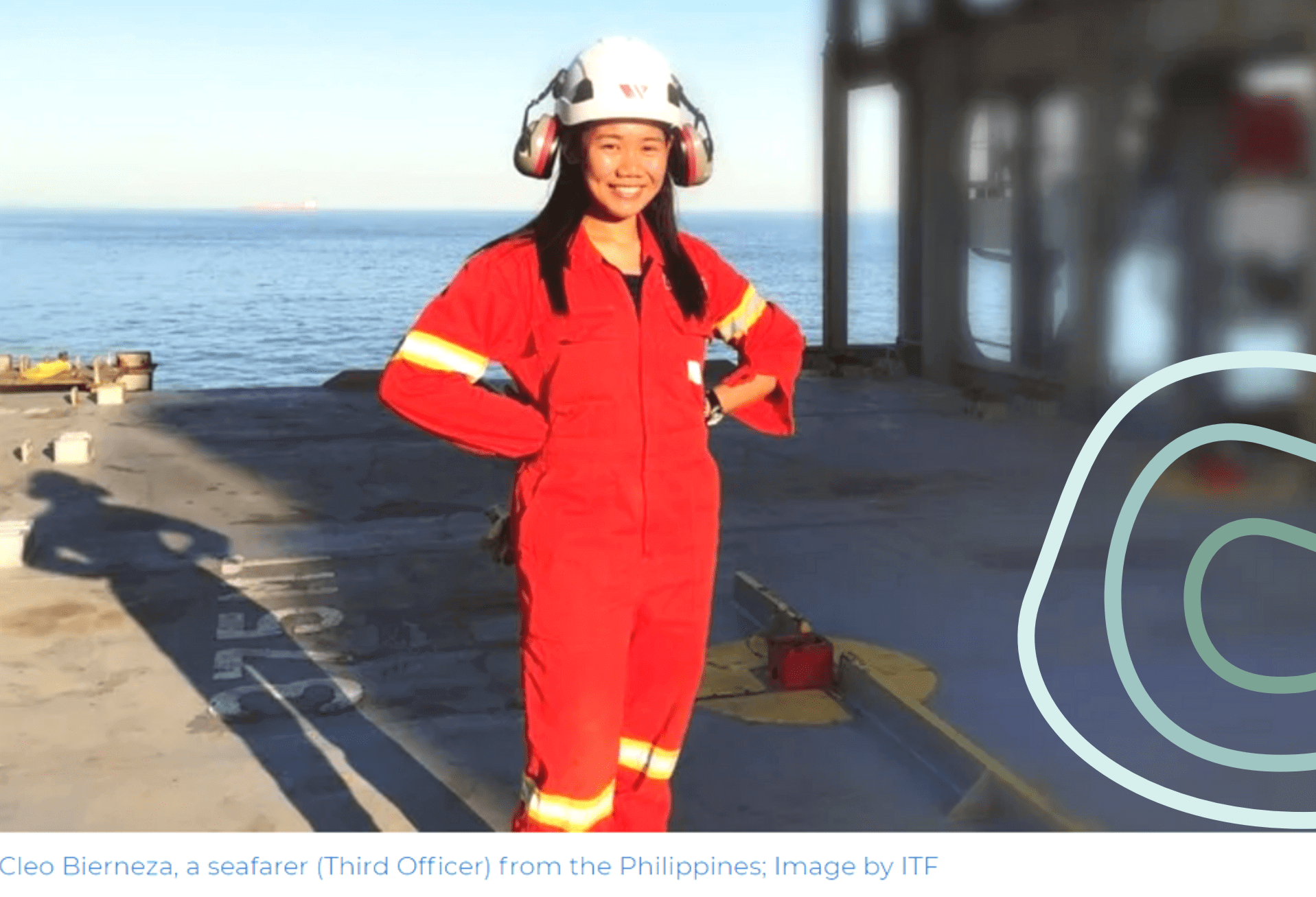
Cleo Bierneza, a seafarer (Third Officer) from the Philippines working
aboard cargo ships, said “As seafarers, we see climate change
happening. Some voyages get very hot nowadays for crew onboard,
and in some places of the world, the weather will change extremely,
without warning. It didn’t use to be like that. I would like maritime to
reduce our own carbon if we can, so the crew can have a more stable
climate to work with. I am excited about a Just Transition because we
can make seafaring an even better job and hopefully bring in more
women to become seafarers.”


Comments are closed